




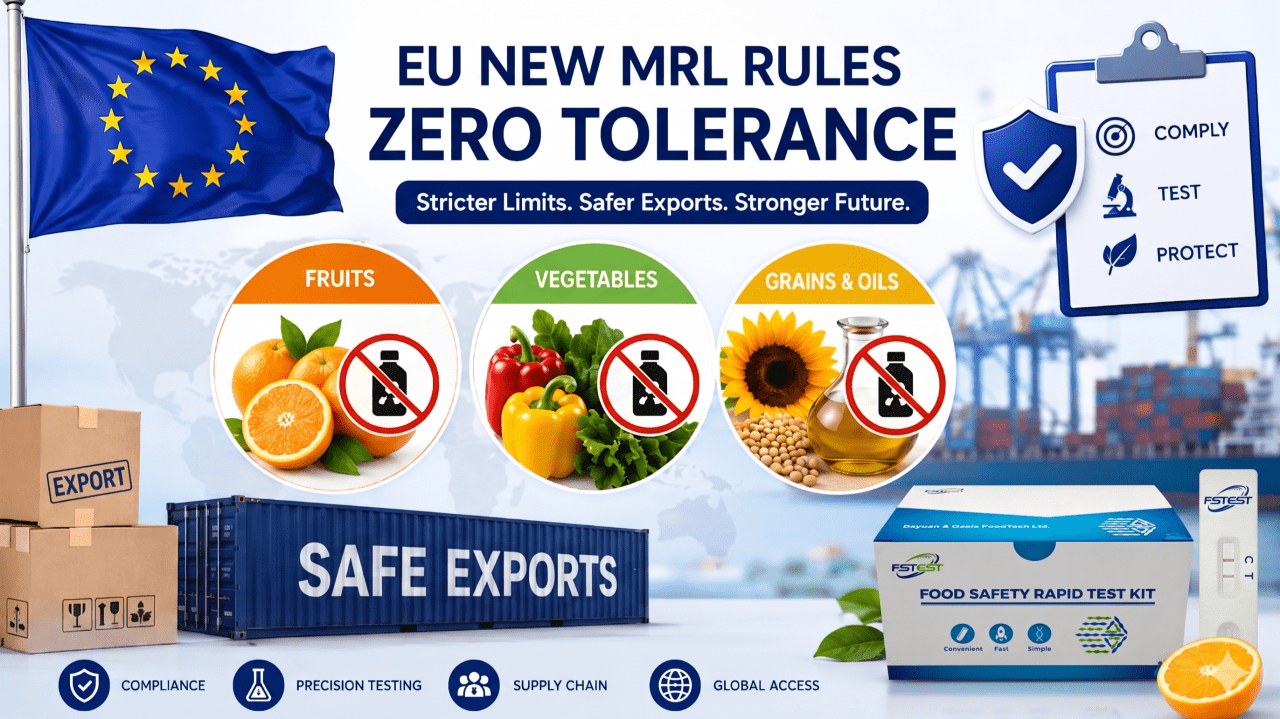
In May 2026, the European Union submitted WTO SPS notification (G/SPS/N/EU/943), proposing stricter Maximum Residue Limits (MRLs) for six pesticides, including carbofuran, imazalil, and mandipropamid. This update highlights the growing importance of pesticide residue monitoring for all countries and suppliers exporting to the European market.
Key Changes
Open for comment until June 30, 2026, the draft takes effect in early 2027 with a 6-month compliance transition. Carbofuran now faces a strict "zero-tolerance" policy across all foods. Imazalil MRLs for citrus, melons, and peppers are tightened to default detection thresholds due to insufficient data. Mandipropamid limits for sweet peppers and melons are reduced, while herbicide residues in grains and leafy vegetables face severely heightened oversight.
Business Impact
Extending the EU's "Farm to Fork" strategy, this revision raises import barriers targeting key export categories. Stricter standards and tight timelines create acute compliance challenges. Exceeding MRLs risks immediate customs rejection, mandatory destruction, heavy fines, and listing on the EU’s RASFF warning system.
Recommended Actions
l Immediate Portfolio Audit: Comprehensively review existing export products against the six new MRL standards.
l Upgrade Testing Capabilities: Integrate FSTest Pesticide Residue Rapid Testing Equipment and Test Kits for highly efficient pre-shipment screening to intercept non-compliant batches at the factory level.
l Strengthen Supply Chain Control: Push testing requirements upstream and provide technical guidance to farming bases and suppliers.
l Monitor Regulations: Track policy updates to ensure smooth compliance during the transition period.
Conclusion
This regulatory shift is a severe challenge but also an opportunity to optimize quality systems. As a professional food safety partner, FSTest delivers one-stop, high-precision rapid testing solutions, helping enterprises overcome trade barriers and confidently secure European market access.


 Log in
