




Bacillus cereus Screening in Starch-Rich Foods and Infant Formula
A risk-based approach combining rapid enumeration, environmental monitoring and confirmatory toxin testing
In February 2026, the European Commission introduced enhanced controls on arachidonic acid oil originating in China following the detection of cereulide in infant formula products. The measure highlights the importance of upstream ingredient control and documented risk-based monitoring throughout the infant nutrition supply chain.
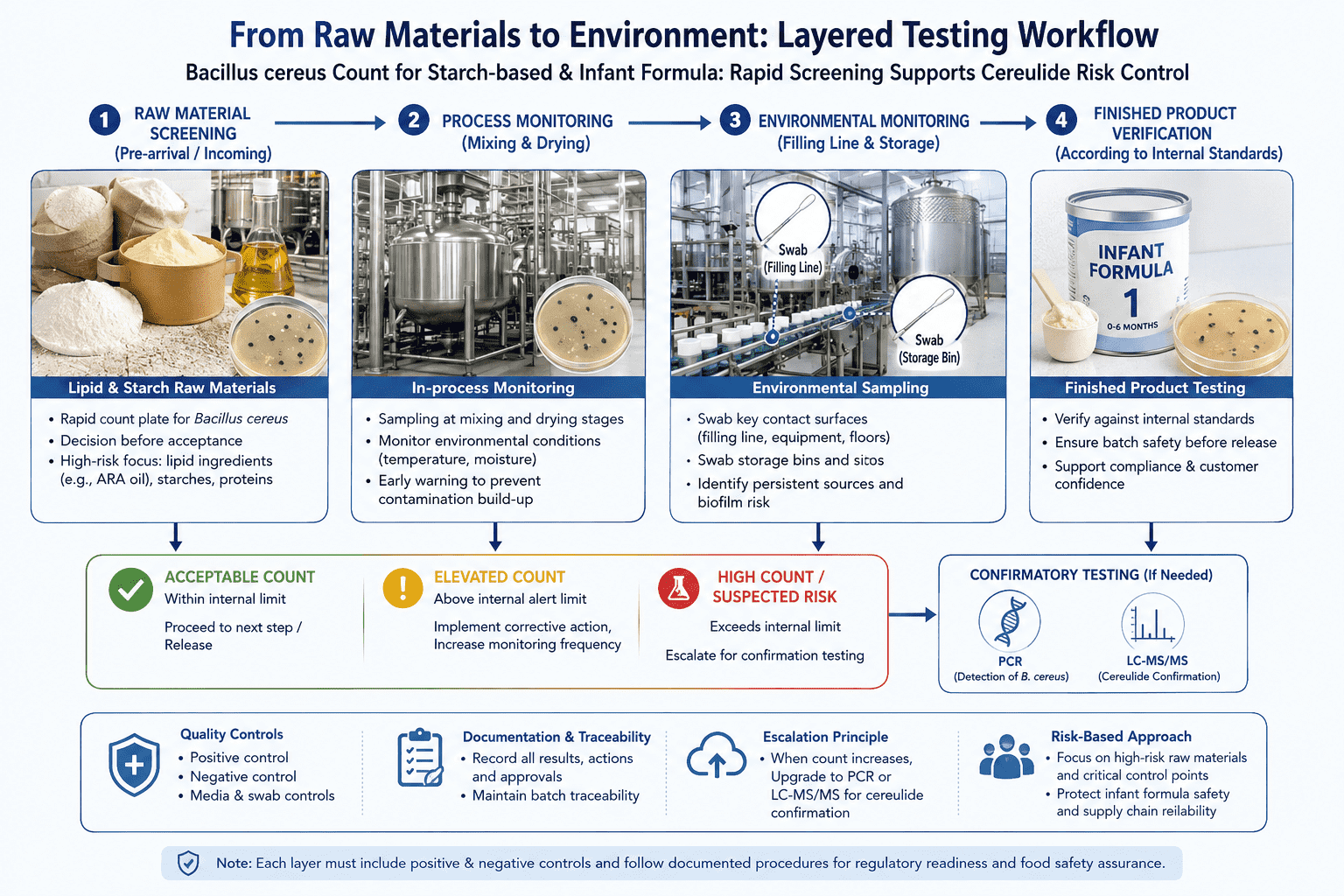
Figure 1. Example layered monitoring and escalation workflow for Bacillus cereus and cereulide risk control.
Understanding the Risk
Bacillus cereus spores may survive routine processing and persist in dry ingredients and production environments. Under favorable time, temperature and moisture conditions, emetic strains may produce cereulide, a heat-stable toxin that is not reliably eliminated by standard heat treatment.
Not all B. cereus strains produce cereulide. Enumeration cannot determine toxin concentration, but it remains useful for detecting changes in raw materials, process hygiene and environmental control.
A Layered Monitoring Workflow
A practical program for starch-rich foods and infant formula may include four linked layers:
· Incoming materials — supplier qualification and risk-based screening of lipid, starch and dairy ingredients.
· Process monitoring — testing at mixing, drying and other relevant control points.
· Environmental monitoring — sampling filling lines, equipment surfaces and storage areas.
· Finished-product verification — assessment against internal specifications, with escalation when required.
Results should be interpreted against site-specific limits and trends. Elevated counts should trigger investigation, corrective action and, where appropriate, confirmatory testing rather than automatic conclusions about cereulide presence.

Supporting Routine Screening
The FSTest Bacillus cereus Count Plate is a ready-to-use chromogenic medium for routine enumeration in supported food and environmental samples. It provides interpretable colony counts within 15–24 hours and can be incorporated into raw-material, process and hygiene monitoring programs. Users should follow the current instructions for use and applicable validation scope.
FSTest technical support can provide available validation data and guidance on integrating rapid enumeration into a risk-based testing plan.
References
· Commission Implementing Regulation (EU) 2026/459 of 24 February 2026.
· ISO 18465 — Quantitative determination of emetic toxin (cereulide) using LC-MS/MS.
· FSTest Bacillus cereus Count Plate — current instructions for use and validation documentation.


 Log in
