




Why Environmental Listeria Detection Is Challenging
Environmental samples can contain stressed target cells, competing background flora, residual sanitizers and debris. Listeria may also persist in niches associated with moisture, difficult-to-clean equipment or biofilms. A negative result therefore means that the organism was not detected in the portion sampled under the stated method conditions; it does not prove that the entire area is free of contamination.
Detection reliability is influenced by the complete workflow:
· Site selection, sampling timing and the surface area covered
· Collection device, technique, neutralizing capacity and sample transport
· Recovery and enrichment conditions for injured or low-level cells
· The validated scope, controls and limitations of the screening method
· Confirmation, interpretation, corrective action and trend review
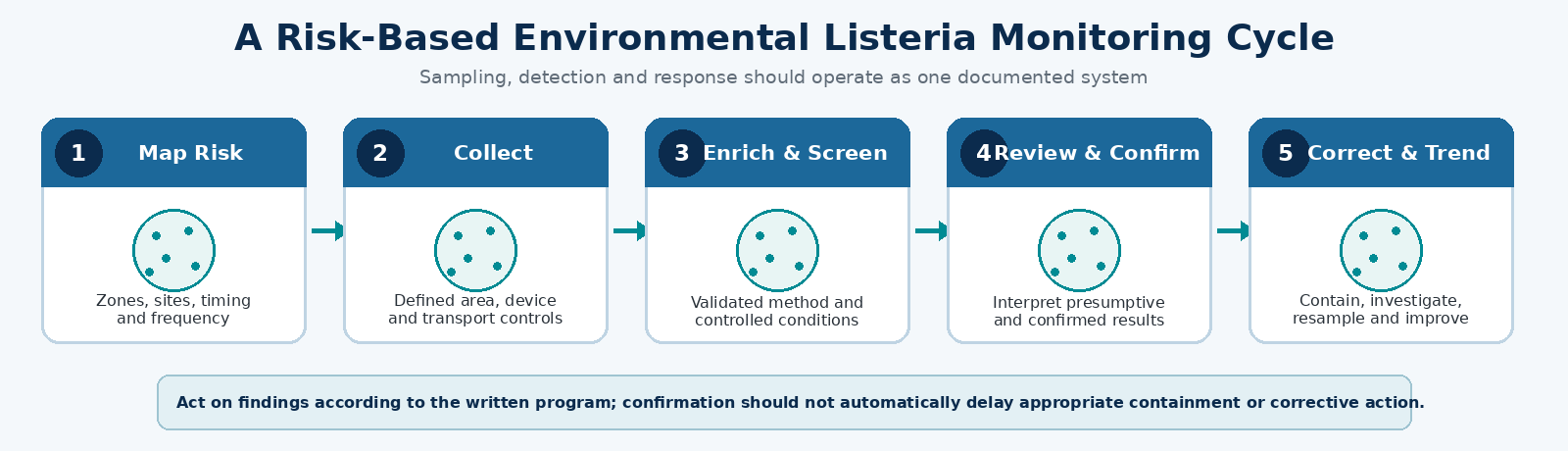
Figure 1. Environmental monitoring works best as a closed-loop verification system.
A Practical Monitoring Framework
1. Map Risk and Define Sampling Sites
Begin with a facility map that reflects product flow, personnel and equipment movement, drainage, moisture, traffic patterns and hygienic boundaries. Many facilities use a four-zone convention—from direct food-contact surfaces to areas progressively farther from exposed product—but zone definitions are not universal. The plan should define its own zones, target organisms, sites, timing and frequencies according to the process, product risk, regulatory requirements and historical findings.
2. Standardize Sample Collection
Written procedures should specify the sampling area, device, wetting or neutralizing solution, collection pattern, operator technique, sample identification, holding conditions and time to analysis. Sampling should be scheduled to answer a defined question—for example, verification after sanitation or detection of organisms that may emerge during production. Consistency makes results more comparable over time.
3. Control Recovery, Enrichment and Rapid Screening
Enrichment is often the largest contributor to detection time and sensitivity. Medium, temperature and incubation duration must follow the validated method and the applicable sample type. Arbitrarily shortening enrichment may prevent injured or low-level cells from reaching the detection threshold. Each run should include appropriate controls, and laboratories should verify the complete method under their own operating conditions.
4. Define Confirmation and Corrective-Action Rules
Rapid screening can provide an earlier presumptive result, while culture or another validated procedure may be required for confirmation. The written program should state how presumptive and confirmed findings are handled. Depending on the site, organism and regulatory framework, appropriate containment, sanitation, product assessment or investigative sampling may need to begin before confirmation is complete.

5. Trend Results and Verify Effectiveness
A single positive or negative result provides limited context. Trend data by site, zone, shift, line, organism and recurring location. After a finding, document the investigation, corrective action and verification of effectiveness. Repeated recovery in the same area—or related findings across connected sites—may indicate a harborage point or movement pathway that requires deeper investigation.
Integrating FSTest Technologies
FSTest Listeria rapid test products are intended to support screening within enrichment-based environmental monitoring workflows. Product selection should be based on the target organism, sample type, validated protocol and applicable local requirements. Before routine use, laboratories should confirm that collection, enrichment, screening and confirmation steps perform as intended for the facility’s environmental samples.
FSTest surface-hygiene monitoring products may be used alongside pathogen testing to support routine sanitation verification. Used together—without treating one as a substitute for the other—these tools can provide a broader view of cleaning performance and microbiological risk.
Conclusion
Improved Listeria detection reliability depends on disciplined execution across the entire monitoring cycle. Risk-based site selection, reproducible sampling, validated enrichment, appropriate confirmation and prompt, documented response are mutually reinforcing. Rapid screening adds the greatest value when it is integrated into this controlled system and supported by meaningful trend analysis.
For application-specific guidance, method compatibility or environmental monitoring support, contact the FSTest technical team.
References
· U.S. FDA — Environmental Sampling and control of environmental pathogens in food facilities.
· U.S. FDA — Bacteriological Analytical Manual, Chapter 10: Detection of Listeria monocytogenes in foods and environmental samples (April 2022).
· ISO 11290-1:2017 — Detection of L. monocytogenes and Listeria spp. in food-chain products and environmental samples; Amendment 1:2026.


 Log in
