




Why Broad-Spectrum Pesticide Screening Still Matters
Independent evaluation of the FSTestTM Rapid Pesticide Residue Test Kit under NY/T 4716-2025

Food-safety screening programs rarely begin with a complete list of the compounds that may be present. For markets, farms, food processors and inspection teams, the first question is often simpler: does this sample show a potential pesticide-residue risk that requires further action?
That is where enzyme-inhibition screening retains practical value. Instead of testing one named pesticide at a time, the method provides a broad risk signal for
organophosphorus and carbamate pesticides that produce a relevant inhibition response—supporting rapid, high-frequency screening before targeted or confirmatory testing.
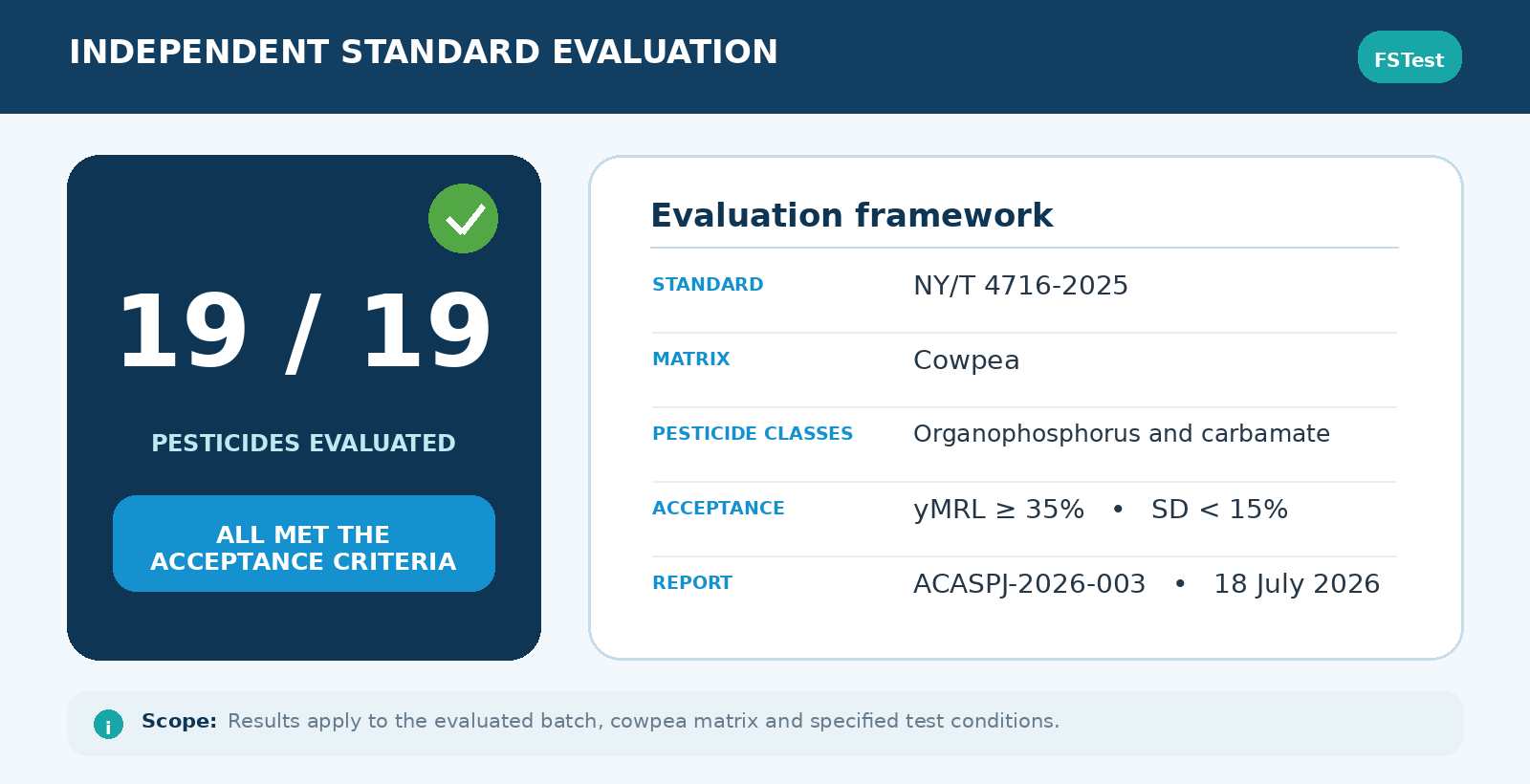 Figure 1. Summary of the independent NY/T 4716-2025 evaluation.
Independent evaluation under the current standard
The FSTest Rapid Pesticide Residue Test Kit was independently evaluated by the Chinese Academy of Quality and Inspection & Testing (CAIQT), a national-level research institution in quality inspection and testing. The evaluation followed NY/T 4716-2025, the agricultural industry standard issued by China’s Ministry of Agriculture and Rural Affairs for performance evaluation and verification of enzyme-inhibition rapid pesticide-residue test products.
Using cowpea as the test matrix and the applicable maximum residue limits in GB 2763, the study evaluated 19 organophosphorus and carbamate pesticides. All 19 met the specified acceptance criteria: enzyme inhibition at the relevant MRL (yMRL) of at least 35% and a standard deviation below 15%. The evaluation was documented in Report ACASPJ-2026-003, issued on 18 July 2026.
The evaluated pesticides were dichlorvos, coumaphos, isocarbophos, trichlorfon, malathion, carbofuran, phoxim, methomyl, triazophos, profenofos, ethion, diazinon, pirimicarb, oxamyl, isoprocarb, fenitrothion, naled, tetrachlorvinphos and quinalphos.
What the result demonstrates—and what it does not
The result provides independent, standard-based evidence that the evaluated kit produced the required inhibition response and repeatability for the 19 pesticides under the stated conditions. This is valuable because it assesses performance at decision-relevant residue levels rather than relying only on internal development data.
· Broad response: one screening workflow can flag potential risk across multiple responsive organophosphorus and carbamate pesticides.
· Operational relevance: rapid screening can help laboratories and field teams prioritize samples, allocate confirmatory resources and increase monitoring frequency.
· Reproducibility: the standard’s variability criterion supports confidence that results are not driven by isolated measurements.
· Defined scope: enzyme inhibition does not identify the individual pesticide and does not claim sensitivity to every pesticide class or every commodity matrix.
Broad screening and target-specific testing are complementary
Colloidal-gold immunochromatographic tests are designed for analyte-specific decisions. They are useful when the priority pesticide is already known and a clear target result is required. However, covering many individual compounds may require multiple target-specific tests.
Enzyme inhibition addresses a different decision: it casts a wider net for responsive organophosphorus and carbamate pesticides. Used together, the two approaches create a more efficient screening architecture—broad screening for unknown or mixed risks, followed by targeted rapid testing and, where required, instrumental confirmation.
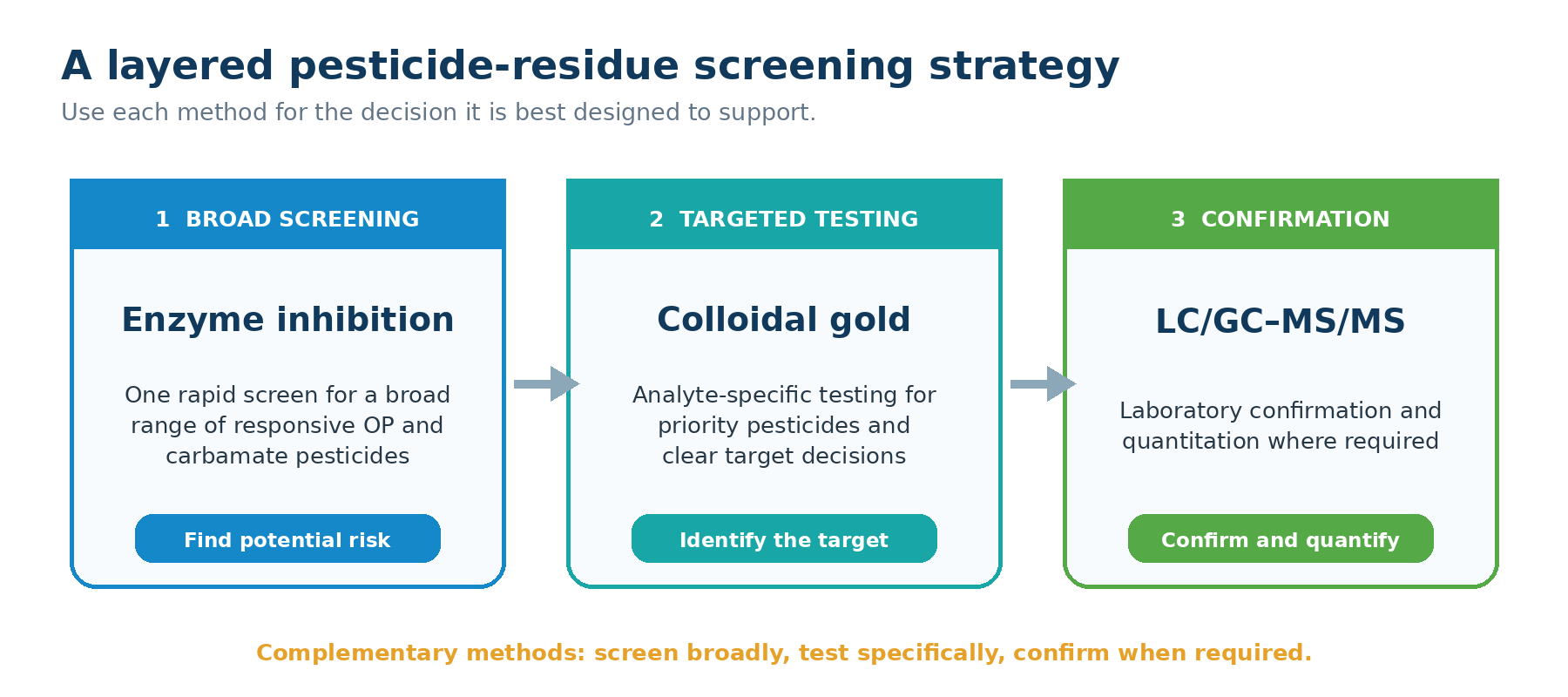
Figure 2. Recommended layered workflow: screen broadly, investigate specifically and confirm when required.
Practical value for food-safety programs
For routine programs, the strongest value is not a claim that one method replaces all others. It is the ability to make the first screening decision quickly and consistently. Enzyme-inhibition testing can support incoming-produce checks, market surveillance, supplier monitoring and other high-throughput applications where the risk profile is not fully known in advance.
A practical program may therefore use enzyme inhibition as the broad first line, FSTest colloidal-gold tests for priority pesticides and LC–MS/MS or GC–MS/MS for regulatory confirmation and quantitation. This layered model balances screening breadth, target specificity, turnaround time and analytical certainty.
Independent evidence that supports confident adoption
Independent evaluation under NY/T 4716-2025 gives distributors, laboratories and food-industry users a clearer basis for technical assessment. It connects product performance to a current, published evaluation framework and demonstrates that the evaluated batch met defined criteria across 19 pesticide challenges at applicable MRLs in cowpea.
FSTest welcomes technical exchange and cooperation with overseas distributors, testing laboratories, food producers and research partners on pesticide-residue screening strategies, method selection, product evaluation and application development.


 Log in
