




Dayuan & Oasis Researcher Contributes to Peer-Reviewed Study on Rapid Chlorpyrifos Screening in Vegetables
Collaborative research explores a practical colloidal gold workflow for on-site and high-throughput screening
A researcher from Guangdong Dayuan Oasis Food Safety Technology Co., Ltd., the group supporting FSTest’s technology and manufacturing capabilities, has contributed to a peer-reviewed study on rapid chlorpyrifos screening in vegetables. The paper was published in the Journal of Food Safety & Quality, Vol. 17, No. 4 (2026), in collaboration with the Guangzhou Institute of Food Inspection and Dongguan University of Technology.
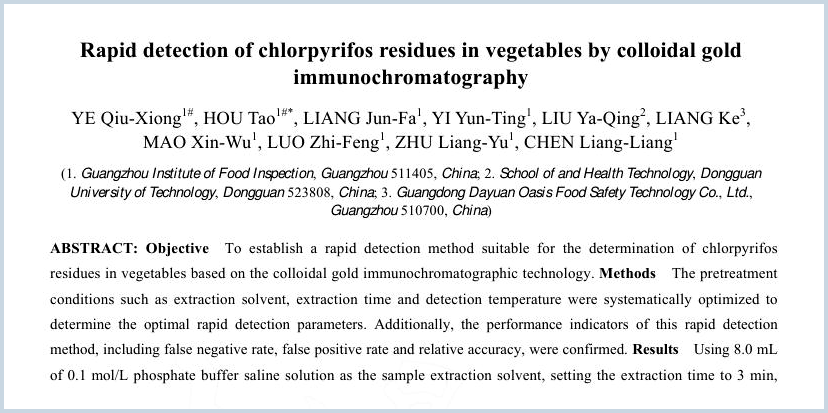
Figure 1. English abstract excerpt from the published paper. Source: Ye et al., 2026. DOI: 10.19812/j.cnki.jfsq11-5956/ts.20251009002.
Why Rapid Chlorpyrifos Screening Matters
Chlorpyrifos is an organophosphate insecticide subject to increasingly stringent and market-specific controls. For growers, food businesses and regulatory laboratories, conventional chromatographic methods remain essential for definitive residue analysis, but they may not always be practical for high-frequency field screening. Rapid immunochromatographic testing can help prioritize samples for confirmatory analysis and support faster risk-based decisions.
What the Study Evaluated
The research optimized key operating conditions for a qualitative colloidal gold immunochromatographic method. Chives and Chinese lettuce were used as representative matrices, and results were compared with LC-MS/MS according to the Chinese national reference method GB 23200.121-2021.
· Aqueous extraction: 2 g of homogenized sample was extracted with 8 mL of 0.1 mol/L phosphate-buffered saline.
· Short preparation: Three minutes of vortex extraction was followed by settling or brief centrifugation.
· Rapid reaction: The immunochromatographic procedure used a 3-minute pre-incubation and a 6-minute strip reaction.
· Operating range: The evaluated temperature range was 15-35 °C.
· Screening level: The qualitative decision point evaluated in the study was 0.02 mg/kg.
Key Findings
Under the conditions evaluated, the rapid method differentiated samples fortified at 0.02 mg/kg from blank and 0.01 mg/kg samples in both tested matrices. The study also compared 20 market samples using the rapid method and LC-MS/MS. One sample containing 2.3155 mg/kg chlorpyrifos was identified as positive by the rapid test, while the remaining samples were reported as negative by both approaches.

From Research to Practical Screening
The study highlights how sample preparation can determine the practical performance of a rapid test. Excessive organic solvent, insufficient extraction time and operation outside the evaluated temperature range affected test behavior. By using a water-based buffer and a simplified workflow, the method was designed to support testing within approximately 15 minutes.
Rapid screening does not replace confirmatory analysis. Presumptive positive results should be confirmed using an appropriate reference method, and laboratories should verify performance for additional commodities, varieties and local regulatory thresholds before routine implementation. Regulatory requirements for chlorpyrifos vary by market and commodity and should be checked at the time of use.
Strengthening Collaborative Food Safety Innovation
Participation in this study reflects the Dayuan & Oasis Group’s commitment to collaboration among regulatory laboratories, academic institutions and industry. Through FSTest, the group continues to translate food safety research into practical screening tools, application guidance and technical support for international customers.
FSTest welcomes technical exchange and multiple forms of cooperation with overseas laboratories, distributors and food-industry partners in rapid pesticide-residue screening and method application.
Publication Details
Paper: Rapid detection of chlorpyrifos residues in vegetables by colloidal gold immunochromatography
Citation: Ye QX, Hou T, Liang JF, et al. Journal of Food Safety & Quality. 2026;17(4):107-112.
DOI: 10.19812/j.cnki.jfsq11-5956/ts.20251009002


 Log in
