



FSTest Reports Annual Progress in Key R&D Project for Import and Export Food Testing
Collaborative research advances rapid screening technologies for contaminants relevant to food safety and border inspection.
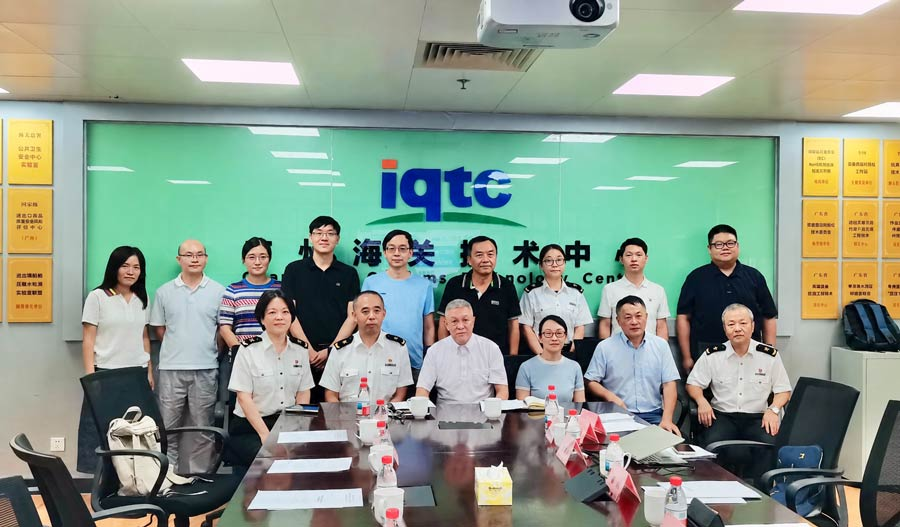
Representatives from the participating institutions and project team following the annual progress review in Guangzhou.
Annual progress review completed in Guangzhou
On October 21, 2026, the project team presented its annual progress for the Guangdong Provincial Key R&D Program project Research and Demonstration of Key Technologies for Efficient Customs Clearance of Import and Export Food. The review brought together representatives from the Guangzhou Customs Technology Center, relevant technical and food-safety divisions, external experts and project participants.
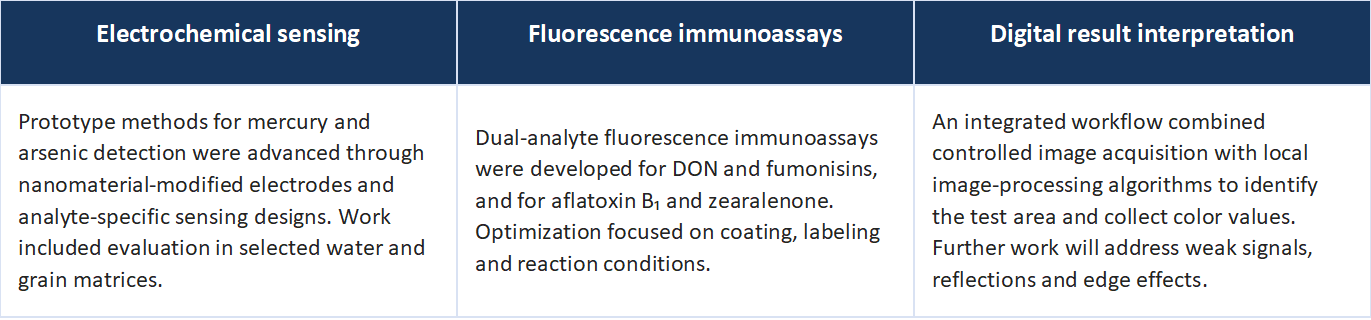
FSTest and the Guangzhou Customs Technology Center are jointly undertaking defined research tasks within the project. FSTest’s work focuses on field-oriented rapid testing technologies, including immunochromatography, fluorescence sensing, electrochemical sensing and digital result interpretation.
The review provided an opportunity to assess the work completed during the year, discuss technical challenges and define priorities for the next phase. The project team will continue to strengthen method verification, prototype optimization and application-oriented evaluation in line with the project plan.
Three technology directions under development
The year’s work covered complementary approaches intended to support faster screening while preserving the role of appropriate reference methods and laboratory confirmation.
From technical progress to practical verification
The project addresses a practical need: food matrices are diverse, risk targets vary and screening results must be produced within operational time constraints. No single rapid method can answer every question. The research therefore combines target-specific assays, sensor-based measurement and digital interpretation to support a more flexible testing workflow.
The next phase will emphasize matrix-specific verification, comparison with appropriate reference methods, robustness studies and continued improvement of prototype equipment. These steps are essential before a method or system can be considered for routine application.
Next phase priorities

Strengthening collaborative innovation
FSTest values the technical guidance and collaboration provided by the participating institutions and experts. The company will continue contributing its experience in rapid-test development, manufacturing and application support while working with project partners to translate research into reliable, fit-for-purpose food-safety tools.


 Log in

