




A Practical Workflow for RTE Dairy and Bakery Quality Control
Ready-to-eat (RTE) dairy and bakery products often receive substantial handling after a heat or pasteurization step. Fillings, creams, cheeses, toppings and manually assembled products can therefore be vulnerable to post-process contamination if hygiene or time–temperature controls are not maintained.
Staphylococcus aureus is particularly relevant because it can be introduced by people and may grow when conditions allow. Some strains can produce heat-stable enterotoxins. Once toxin has formed, subsequent heating may not make the food safe, so prevention, environmental control and timely monitoring remain essential.
Why Routine Testing Can Delay Decisions
Reference culture methods remain important for enumeration and confirmation, but the complete workflow may require more than one day, depending on the method and the need for confirmatory testing. For short-shelf-life RTE products, this can extend batch holds and slow investigations.
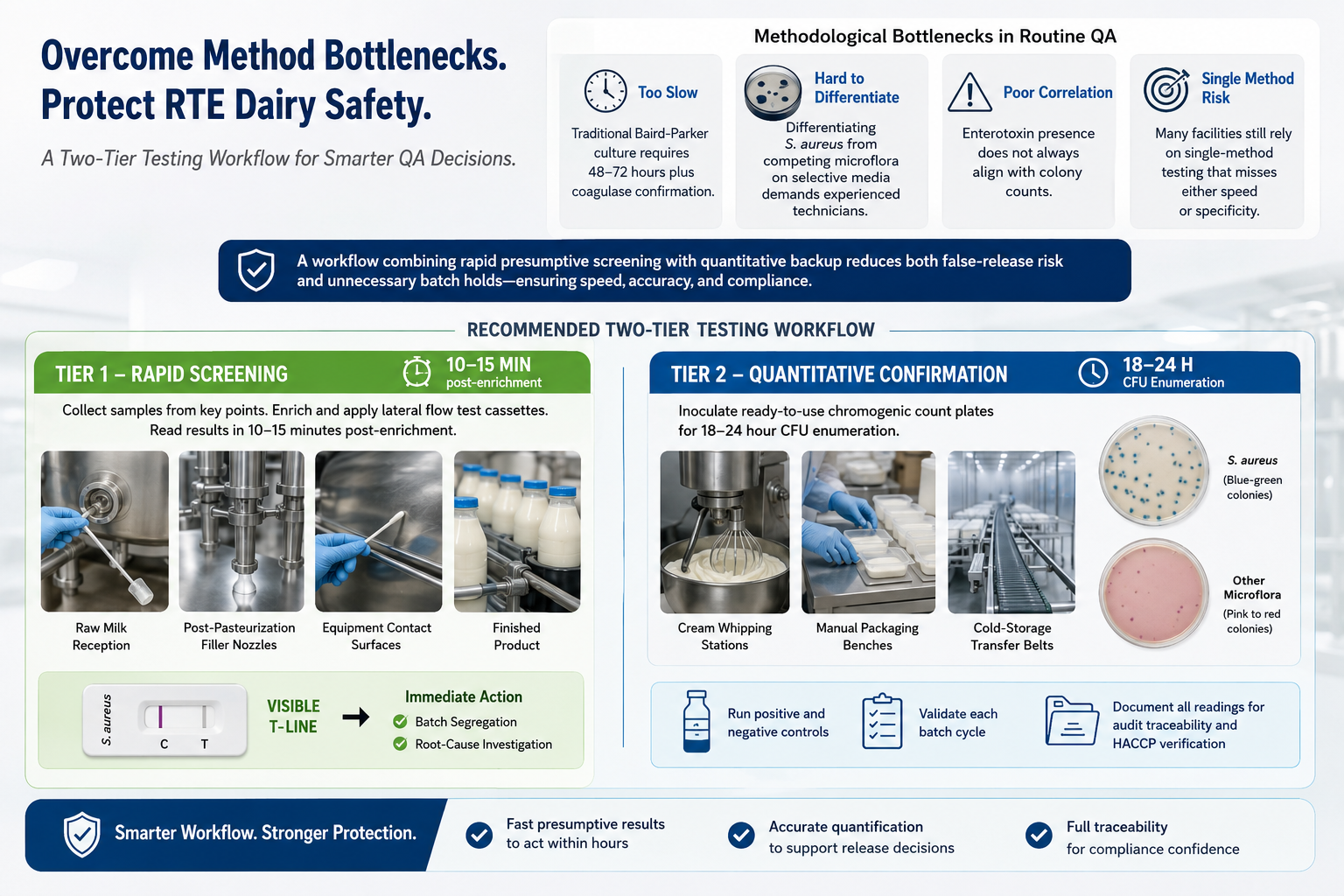
A risk-based program can combine rapid presumptive screening with quantitative enumeration. The two approaches serve different purposes: screening supports an earlier response, while enumeration provides count data for verification, trending and follow-up investigation.
A Complementary Screening-and-Enumeration Workflow

Tier 1 — Rapid Presumptive Screening
Select product and environmental sampling points through the facility’s HACCP plan, risk assessment and environmental monitoring program. Examples may include incoming ingredients, post-process food-contact surfaces, filling or whipping equipment, manual handling areas and finished RTE products.
After sample preparation and enrichment, apply the S. aureus lateral flow test according to the product instructions. The test provides a visual result in approximately 10–15 minutes after enrichment. A presumptive positive should trigger the facility’s predefined response, which may include product hold, sanitation review, root-cause investigation and confirmation using an appropriate reference or validated alternative method.
Tier 2 — Quantitative Enumeration
Use a validated quantitative method when count data are needed for specification checks, process verification, trend analysis or follow-up investigation. A ready-to-use chromogenic count plate can simplify media preparation and provide next-day enumeration; actual incubation conditions and time to result should follow the current instructions for the applicable sample type.
Quality controls, colony interpretation, confirmation requirements and reporting rules should be defined in the laboratory procedure. ISO 6888-1:2021 and FDA BAM Chapter 12 describe reference approaches for enumerating coagulase-positive staphylococci or S. aureus in foods; laboratories should select methods appropriate to their regulatory and validation context.
Important interpretation note Testing for S. aureus does not directly determine whether staphylococcal enterotoxin is present or absent. Where toxin formation is suspected, use a validated enterotoxin method and follow the facility’s food-safety response procedure. |
How the Two FSTest Formats Support the Workflow
S. aureus Rapid Test Kit (Lateral Flow)
Designed for rapid presumptive detection after enrichment, with a visual readout in approximately 10–15 minutes. It can support earlier screening decisions during production monitoring and investigations when used with a validated sampling and enrichment procedure.
S. aureus Count Plate
A ready-to-use chromogenic format for quantitative enumeration without conventional agar preparation or pouring. It can support routine count testing, verification and trend monitoring, subject to the applicable incubation, interpretation and confirmation requirements in the current product instructions.
Practical Implementation Considerations
· Validate the complete workflow for each product and environmental matrix before routine use.
· Define sampling locations, frequency and actions through the site’s risk assessment and food-safety plan.
· Separate presumptive screening decisions from final confirmation and release criteria.
· Trend results by zone, line, product type and time period to identify recurring hygiene or process issues.
· Maintain documented training, controls, lot traceability and result records.
Build a Workflow That Fits Your RTE Process Contact FSTest for current product specifications, validation information and technical guidance for integrating rapid screening and enumeration into your quality-control program. |


 Log in
